The Heritage Eco-Pivot: Sustainable Restoration in Edinburgh's New Town.
Exploring the challenge of integrating 21st-century ESG standards into Edinburgh's historic Georgian architecture.

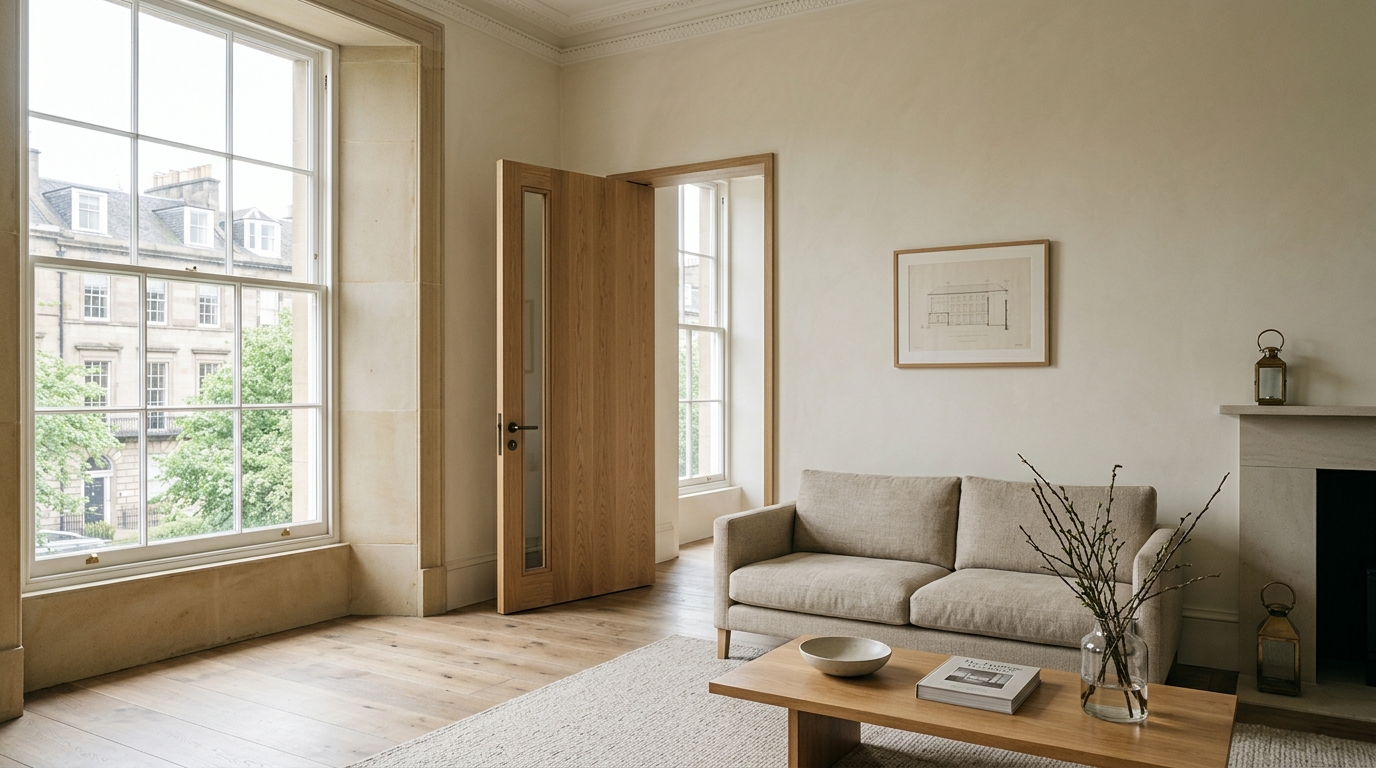
The Heritage Eco-Pivot: Sustainable Restoration in Edinburgh’s New Town
In Edinburgh, the ‘Green Premium’ is a delicate balancing act between extreme historical preservation and modern environmental performance. The challenge—and the opportunity—lies in the ‘Heritage Eco-Pivot.‘
The Core Driver: The Conservation Dilemma
The driver is the tension between the city’s strict conservation laws and the global shift toward carbon neutrality. For the owner of a Georgian townhouse, the ‘Trophy’ is no longer just the facade, but the ability to achieve high energy efficiency without altering a single stone of the UNESCO-protected exterior.
‘Invisible’ Sustainability
Sustainable luxury in Edinburgh is characterized by ‘Invisible Engineering.’ This involves the use of vacuum-insulated panels, geothermal heat pumps hidden in cellars, and smart-glass that maintains the thermal envelope while preserving the period aesthetics. The prestige is found in the ‘Technical Mastery’ of the restoration.
Investor Implications
We are seeing the emergence of a ‘Certification Premium’ for restored heritage assets. A Georgian home that is both historically accurate and energy-efficient is the most coveted asset in the city. Conversely, the ‘Brown Discount’ is hitting assets that are cold, damp, and energy-inefficient, as the next generation of wealth refuses to compromise on performance.
Actionable Strategy
- The ‘Surgical Retrofit’ Play: Target under-performing heritage assets in the New Town. The value-add is in the ‘invisible upgrade’—bringing the home to modern ESG standards while maintaining its historical soul.
- Prioritize ‘Low-Impact’ Materials: Use lime-plasters and natural insulation that are breathable and compatible with ancient stone.
- Focus on ‘Health-First’ Interiors: Integrate medical-grade air filtration to combat the dampness typical of old Scottish estates.
Conclusion
Sustainability in Edinburgh is the ultimate expression of stewardship. The assets that will dominate the market are those that prove that the most prestigious homes can also be the most responsible.