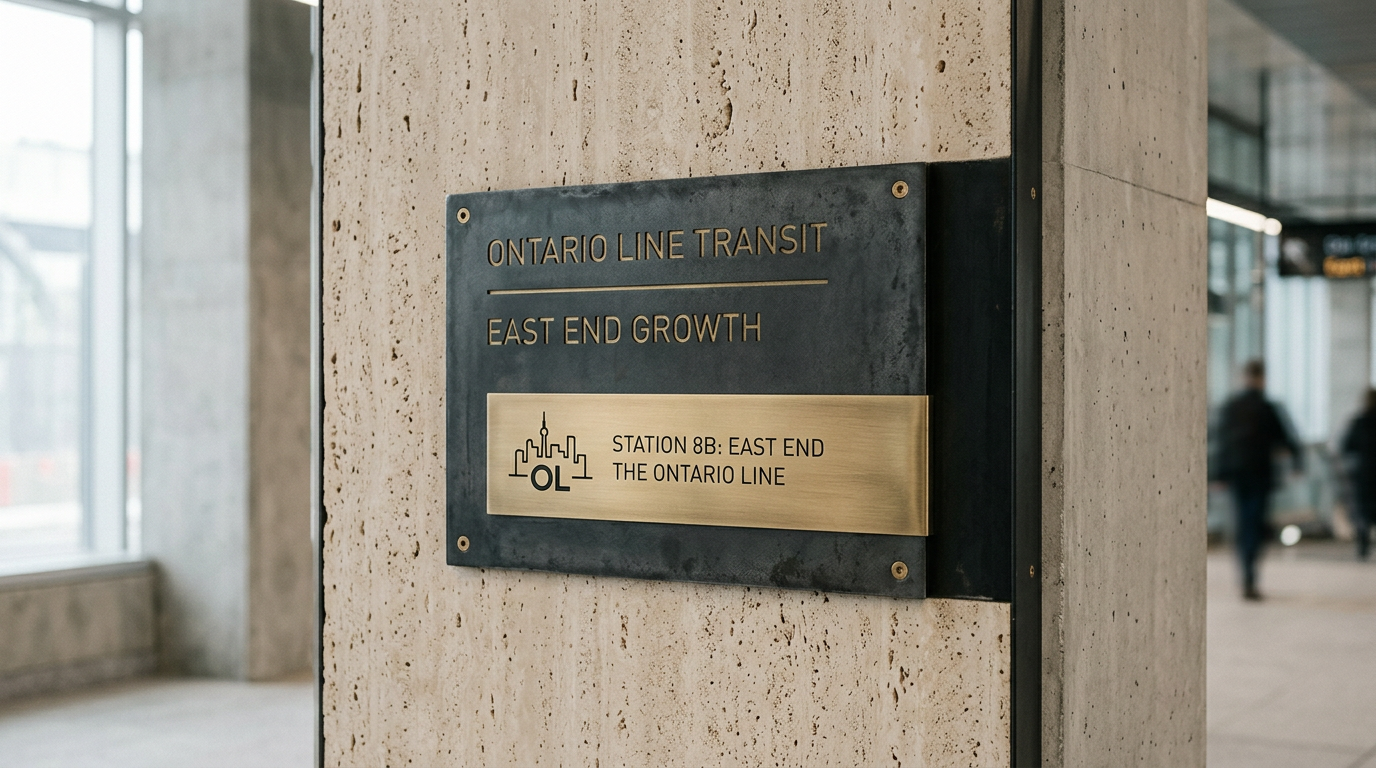
The Ontario Line Transit Corridor: East End Growth.
Evaluating the impact of the Ontario Line on Toronto's East End real estate.

Introduction
The Ontario Line is set to be a game-changer for Toronto’s transit network. Specifically, the East End is poised for a massive transformation as it gains direct, rapid access to the downtown core.
Core Driver (Regulatory/Economic)
The driver is the provincial government’s commitment to transit-oriented density. The “Transit-Oriented Communities” (TOC) framework allows for significantly higher density around new stations, unlocking land value.
Investor Implications
Pros:
- Significant potential for rezoning and densification.
- Increased demand for rentals in previously “underserved” eastern neighborhoods.
- Strong capital appreciation potential.
Cons:
- Years of construction disruption.
- Speculative pricing already occurring in some pockets.
Actionable Strategy
Target older, low-rise commercial or residential properties within a 500m radius of planned stations. The goal is to hold these assets for future high-density redevelopment.
Conclusion
The Ontario Line is the most significant catalyst for growth in Toronto’s East End. Those who identify the correct “nodes” of development now will see the greatest returns.