Industrial-Luxe: Montreal's AI-Driven Residential Renaissance.
Montreal's AI and industrial convergence as a catalyst for a new residential renaissance in Canada's Francophone capital.

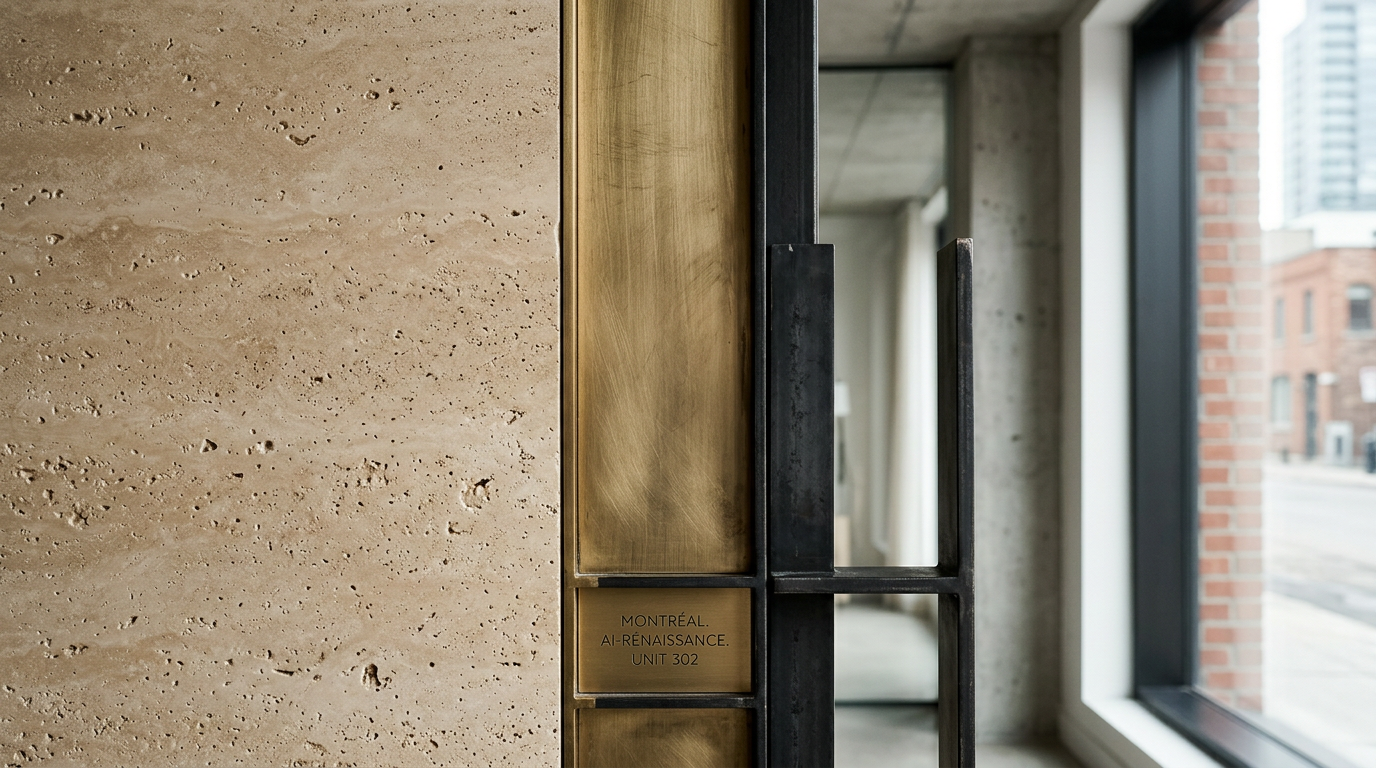
Industrial-Luxe: Montreal’s AI-Driven Residential Renaissance
Introduction
Montreal is experiencing a profound transformation in its high-end residential demand, driven by its emergence as a global epicenter for Artificial Intelligence. This influx of ‘new wealth’—characterized by technical founders and global researchers—is rejecting traditional luxury in favor of ‘industrial-luxe’ adaptive reuse.
Core Driver: The AI-Hub Effect
The concentration of AI talent and capital in Montreal has created a demand for residential spaces that mirror the aesthetic of the city’s tech incubators: high ceilings, raw materials, and expansive, flexible floor plans. This is a pivot away from the gilded ornamentation of the Golden Square Mile toward a more institutional, minimalist luxury that prioritizes intellectual space and technological integration.
Investor Implications
We are seeing a rapid appreciation of legacy industrial assets in districts adjacent to the AI corridor. These assets, once viewed as marginal, are now prime targets for conversion into ultra-prime lofts. The valuation is no longer tied to traditional ‘neighborhood prestige’ but to the proximity to the innovation ecosystem and the architectural potential for adaptive reuse.
Actionable Strategy
Focus on the acquisition of underutilized industrial warehouses with historical character and structural integrity. The strategy is to execute high-spec conversions that integrate smart-home infrastructure with raw industrial aesthetics, targeting the ‘founder-class’ who seek a residence that doubles as a sanctuary for deep work.
Conclusion
Montreal’s ultra-prime market is being rewritten by the AI revolution. By pivoting toward industrial-luxe adaptive reuse, investors can capture the demand of a new global elite who value authenticity and innovation over traditional luxury tropes.