Green Caps: The Institutionalization of ESG in Melbourne's Commercial Luxury.
Analyzing the shift toward sustainable 'Grade A' commercial assets and the impact of ESG on cap rates in Melbourne's CBD.

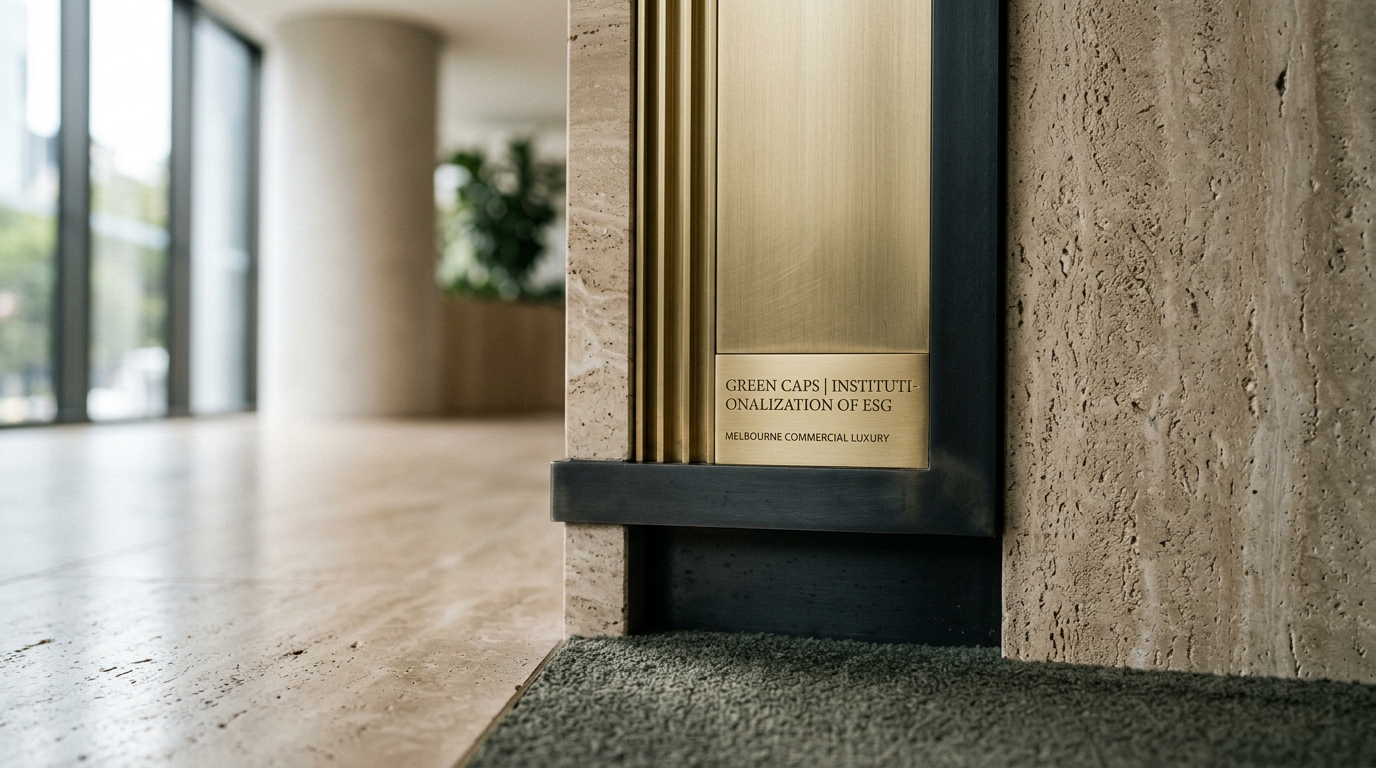
Green Caps: The Institutionalization of ESG in Melbourne’s Commercial Luxury
In the world of institutional real estate, ‘ESG’ has moved from a corporate social responsibility (CSR) checklist to a core driver of the capital value. In Melbourne’s CBD, the emergence of ‘Green Caps’—lower capitalization rates for high-ESG assets—is fundamentally altering the commercial landscape.
The Core Driver: Institutional Mandates
The driver is the rise of institutional mandates. Global pension funds and sovereign wealth funds now have strict ESG requirements for their portfolios. If a commercial asset does not meet a specific sustainability threshold (e.g., NABERS 5-star or LEED Platinum), it is effectively ‘un-investable’ for the largest pools of capital in the world.
The ‘Flight to Quality’ and the ‘Stranded Asset’
This has created a ‘Flight to Quality’ toward the newest, greenest buildings in the CBD. Conversely, we are seeing the emergence of ‘Stranded Assets’—buildings that are functionally sound but environmentally obsolete. These assets are seeing a rapid increase in cap rates (decreasing in value) as they become unattractive to institutional buyers.
Investor Implications
The ‘Green Premium’ in commercial real estate is manifest in the lease. High-end corporate tenants—especially those with their own public ESG commitments—are willing to pay a premium for space in a sustainable building. This increases the Net Operating Income (NOI) and, consequently, the asset’s total value.
Actionable Strategy
- The ‘Asset Repositioning’ Play: Target ‘Grade B’ commercial assets in prime locations and execute a ‘Green Repositioning.’ By upgrading the energy systems and achieving a high NABERS rating, you can move the asset from a ‘Stranded’ category to a ‘Green Cap’ category.
- Prioritize ‘Wellness-Certified’ Office Space: Integrate WELL standards into commercial leases. The post-pandemic corporate world prioritizes employee health, and ‘Wellness-Certified’ space commands the highest rents.
- Monitor ‘Carbon Tax’ Projections: Anticipate future carbon pricing. Assets that are already carbon-neutral will be the only ones that avoid the ‘Carbon Tax’ drag on NOI.
Conclusion
ESG is no longer an ‘extra’ in Melbourne’s commercial market; it is the primary determinant of institutional value. The ‘Green Cap’ is the new benchmark, and those who can lead the transition will capture the highest returns.